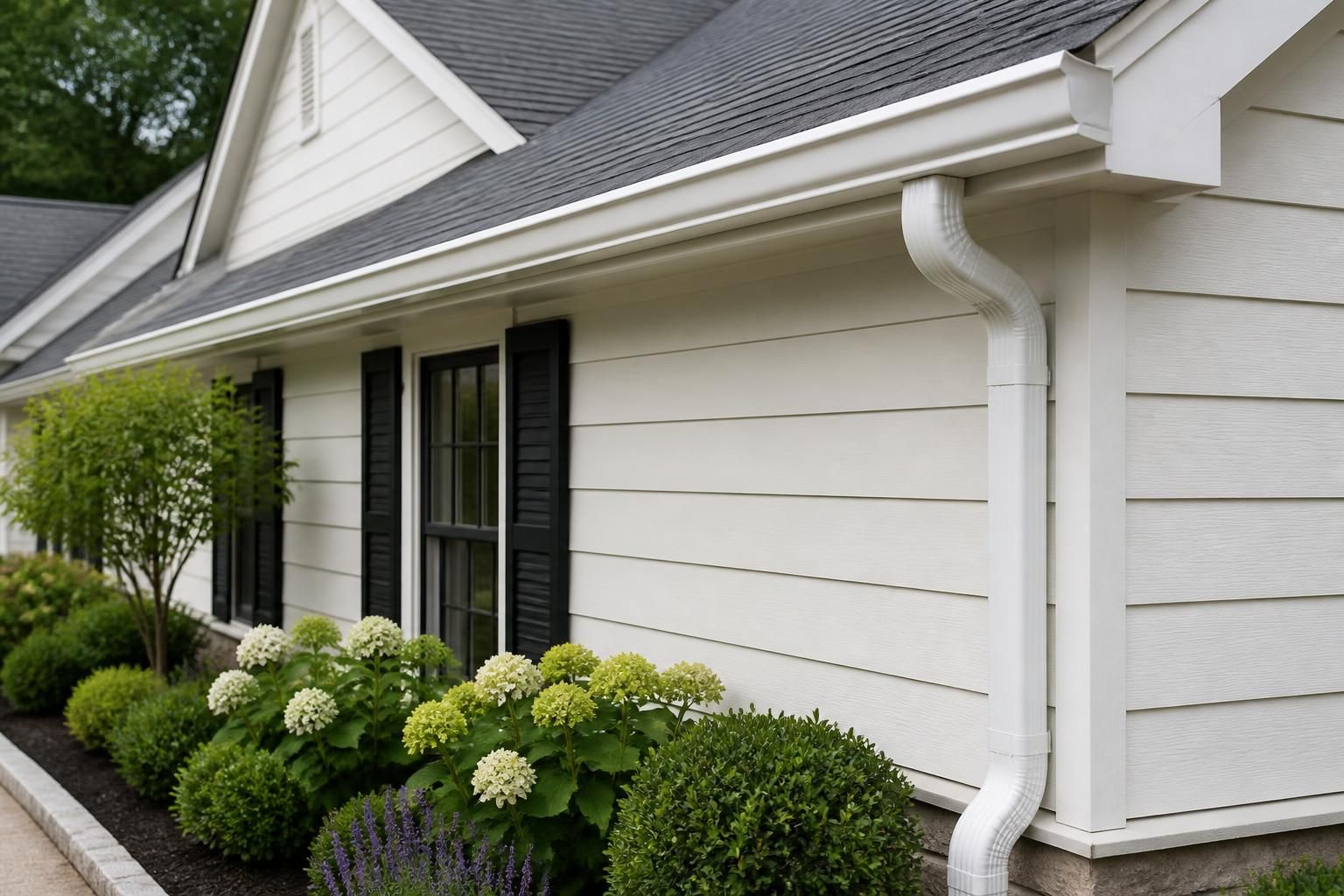
Gutter installation from Hargrove Roofing covers San Antonio, Texas homeowners who have no gutters, gutters that are sagging or pulling away, or a roofline that dumps water where it should not go. We measure the roof edge, plan the gutter runs and downspouts, and hang a new system that sends rain away from your home. To get started, call or send a request and tell us what you are seeing.
Maybe water pours off the roof in a sheet and splashes mud onto your siding. Maybe the soil next to the slab is washing out, the fascia boards are stained or soft, or the back door is a muddy puddle after every storm. Those are the usual signs that the roof edge needs a real drainage path, and a quick look at how the water behaves during a hard rain is often enough to show where the gutters and downspouts should go.
Signs you need gutters
Some homes in San Antonio never had gutters, and plenty of others have old ones past their useful life. Here is what usually points to a full installation rather than a patch:
- Water spilling over the roof edge and carving trenches or bare spots in the beds below
- Dark streaks, peeling paint, or rot along the fascia and soffit
- Gutters that sag, separate at the seams, or pull away from the house
- Rust spots, cracks, or dents that keep coming back after repairs
- Splash-back that stains the lower courses of siding, brick, or stone
- Pooling near the foundation, garage door, or entry steps
If you notice two or three of these together, it is worth having the whole roof edge looked at instead of treating each symptom alone.
What installation covers
A complete gutter installation is more than hanging a long channel under the shingles. The job normally includes measuring each roof edge, deciding where the gutters should drain, setting the slope, attaching the gutters to solid backing, adding downspouts, and sealing corners and end caps. If old gutters are coming off, hauling them away and checking the boards behind them is part of the work.
New gutters on a home without any
When a house has never had gutters, the main decision is where the water should end up. Downspout placement matters as much as the gutters themselves, since one poorly placed outlet can undo the rest of the system. Walkways, patios, and driveways all affect where the water can go.
Replacing worn-out gutters
Tearing out old gutters gives a clear look at the fascia and the roof edge. Soft or damaged boards should be dealt with before new gutters go up, because fresh gutters hung on weak wood will not stay put. Roof edge damage that goes beyond the gutter line is a roof repair question, and we can look at that during the same visit.
Installation or repair?
Homeowners often call about a leaking corner or a loose section and wonder whether they need new gutters. Gutter repair, gutter cleaning, and gutter guards are different jobs from installing a new system. This page covers installation: new gutters, new downspouts, and the layout that goes with them. If you are not sure which one you need, ask us. We will tell you what we see on your roof edge, and if a task falls outside what we offer, we will say so plainly.
As a rule of thumb, one loose bracket or a single failed seam can often be fixed. Gutters that are rusted through in several places, bent from ladders or fallen limbs, or sloped the wrong way usually cost more in repeated fixes than a fresh install.
San Antonio rain and roofs
Rain here tends to arrive in bursts. A dry stretch can be followed by a heavy downpour that dumps a lot of water in a short time, and gutters have to handle that rush. Most undersized or poorly pitched systems show their weakness during those storms, not in a light drizzle.
Soil matters too. Many San Antonio yards sit on clay-heavy or shallow rocky ground, and soil that swells when wet and shrinks when dry can be hard on foundations. Water that lands beside the slab week after week does not help. Directing it several feet away is one of the simpler ways to ease that pressure.
Spring hail and strong summer sun are rough on gutters as well. Dents, faded finishes, and loose fasteners are common after a few seasons, which is why gutter work is often planned alongside roof work when a roof replacement or storm damage repair is already on the schedule.
How the job goes
- Roof edge walk-through. We look at the roof, fascia, existing gutters if any, and the ground below to see where water collects.
- Layout and quote. The gutter runs, corners, downspout locations, and drainage points are laid out and written into a quote you can review.
- Removal and prep. Old gutters come off, and the fascia gets checked so the new system has solid backing.
- Hanging and sloping. Gutters are attached with a slight pitch toward the outlets, then joined, sealed, and capped.
- Downspouts and final check. Downspouts are fitted and the system is looked over from end to end, ideally with water to confirm it drains.
Scheduling depends on the size of the house, the number of roof edges, and the weather, so ask for an estimated window when you get your quote.
Signs of good work
Whoever you hire, here are practical standards you can use to judge the result:
- Visible slope. Water should travel toward the downspouts, not sit in the channel. After a rain, standing water in a gutter is a red flag.
- Solid attachment. Gutters should be anchored to sound fascia at regular intervals, not just tacked at the ends.
- Tight seams and corners. Look for clean joints with sealant that is neat, not smeared or gapped.
- Sensible downspout exits. Water should discharge well away from the foundation and not toward a neighbor, a walkway, or a low spot.
- Clean site. Old gutters, screws, and cut-off pieces should be gone when the crew leaves, with no metal scraps in the lawn.
What affects cost
Gutter pricing is worked out from the specifics of your house, not from a flat guess. The main factors are:
- Total length of roof edge that needs gutters
- Number of stories and how hard each edge is to reach
- Gutter style, size, material, and color
- Number and length of downspouts, plus any extensions or drainage runs
- Removal and disposal of existing gutters
- Fascia or trim repairs found once the old system is off
- Complicated rooflines with many corners, valleys, or short runs
A clear written quote should spell out the scope for each side of the house, the materials and style, the number of downspouts and where they drain, what is and is not included (haul-away, fascia repair, cleanup), and how changes are handled if hidden damage turns up. If a quote is one line with a single total, ask for more detail.
Ask before you hire
Before signing with any gutter installer in the San Antonio area, ask these questions and expect direct answers:
- What is included in the quote? Ask whether it covers removal of old gutters, downspouts, fascia repair, and cleanup.
- Do any local permits or licenses apply to this work? Ask what they are and whether the installer can show them.
- Is the crew insured? Ask for proof if you want it, especially for work on a two-story house.
- Where will the downspouts drain? A good answer references your lot, not a generic plan.
- When can the work start and how long will it take? Ask how weather delays are handled.
- How will you keep me updated? Find out who your contact is and how changes are communicated.
Common questions
How long does gutter installation usually take?
Many single-family homes can be done in a day or two, though larger houses, multiple stories, and complicated rooflines take longer. Rain can also push the schedule, so ask for an estimated window with your quote.
How do you work out the price?
The price comes from the length of roof edge, the height of the house, the gutter style and material, the number of downspouts, and any removal or fascia repair. We look at your home first, then put the scope and costs in writing.
When is it time to replace gutters instead of fixing them?
If gutters leak at several seams, have rust through the metal, sag along most of a run, or have been repaired repeatedly, replacement usually makes more sense than another patch.
Do I need gutters on every side of my house?
Not always. Edges that drain onto a hard surface or a high-traffic entry usually matter most. A walk-through can show which sides collect the most runoff and which can wait.
Should gutters be installed with a new roof?
It often makes sense to plan them together, since the roof edge is already exposed and any fascia problems are easier to spot. If your roof is fine, gutters can be added on their own.
How do I get started?
Call or send a request through the site with a quick description of what you are seeing, such as overflow, rot, or pooling by the foundation. We will set up a time to look at your roof edge and talk through options for your San Antonio home.