Hargrove Roofing handles leak repair in San Antonio, Texas for homeowners who have water coming through a ceiling, a stain spreading on a wall, or a damp attic. We trace the water back to its entry point on the roof and fix that spot, not just the stain below it. To get started, call or send a request describing where you see the water and when it shows up.
Most roof leaks are easy to ignore at first. A brown ring on the ceiling after a heavy storm dries out and fades, then comes back the next time it rains. Meanwhile the water is soaking insulation, softening decking, and feeding mold you cannot see. The sooner the source is found, the smaller the repair usually is.
Signs of a roof leak
Not every leak drips into a bucket. Many show up as small changes that are easy to explain away. Watch for these:
- Yellow or brown stains on ceilings, especially near corners, vents, or light fixtures
- Paint that bubbles, peels, or feels soft on upper-floor walls
- A musty smell in a closet, hallway, or attic after rain
- Damp, darkened, or compressed insulation in the attic
- Daylight visible around pipes, vents, or the chimney from inside the attic
- Shingles that are cracked, curled, lifted, or missing granules
- Rusted fasteners or open seams on metal panels
- Standing water or soft spots on a flat roof section
If you notice any of these, take a few photos and note the date and weather. That timeline helps narrow down where the water is getting in.
Where leaks start
The stain on your ceiling is rarely directly under the hole in the roof. Water travels along rafters, decking, and pipes before it shows itself, so the entry point can be several feet away.
Flashing and roof penetrations
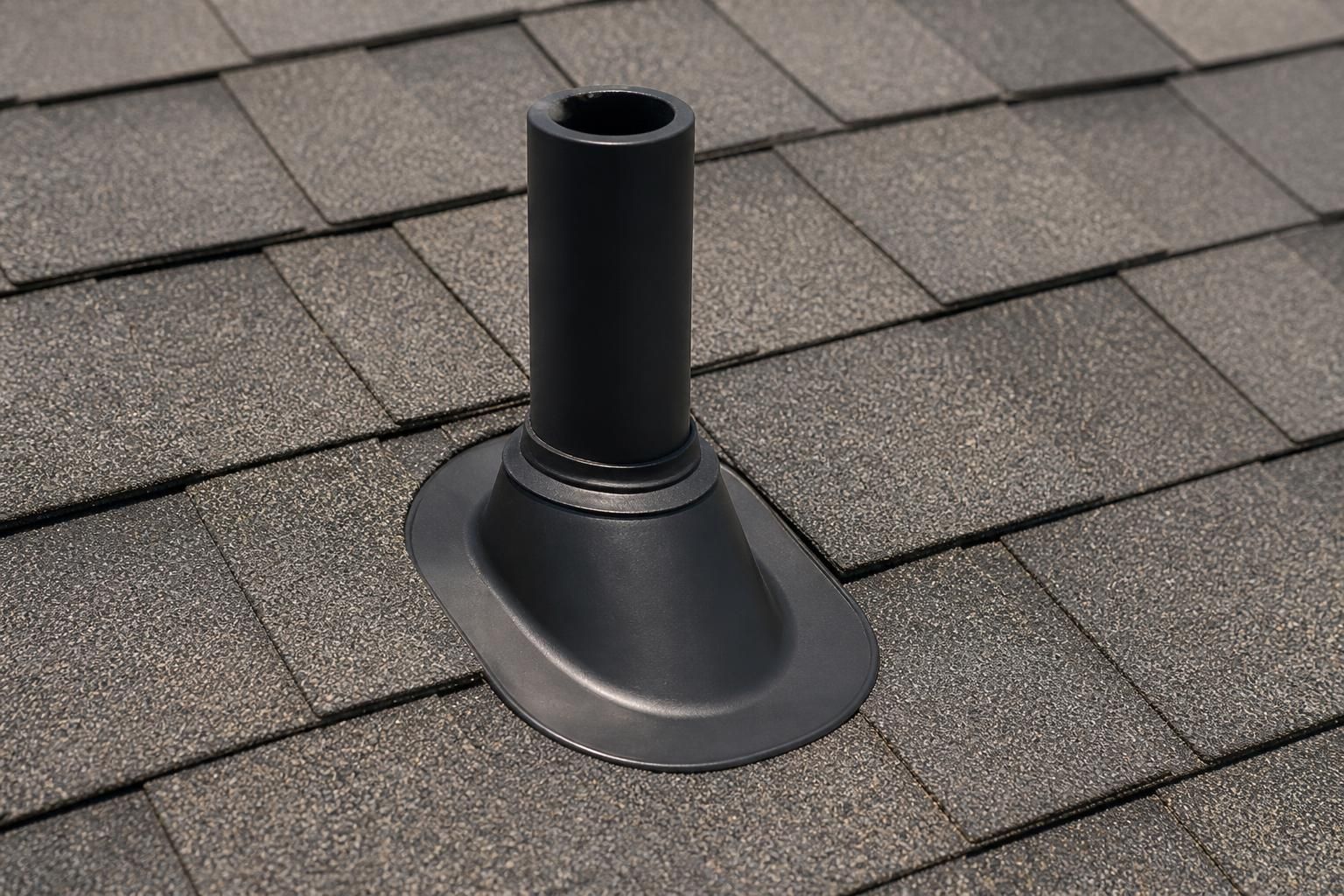
Plumbing vents, chimneys, skylights, and wall-to-roof joints are the most common trouble spots. The sealant and metal flashing around them can dry out, crack, or pull loose after years of sun and temperature swings. A leak here often happens only when rain is driven sideways by wind.
Shingles, metal panels, and flat roofs
On shingle roofs, leaks tend to come from cracked or lifted shingles, exposed nails, or storm-bruised areas. Metal roofs usually leak at loose fasteners, panel seams, or trim details. Flat roofs leak where seams open, membranes blister, or water ponds and sits. San Antonio gets strong summer sun and the occasional hard hailstorm, and both can wear on roofing materials over time.
Leak repair or roof repair
Homeowners often use these terms interchangeably, but they cover different scopes. This page is about leak repair: finding the specific source of water entry and stopping it. Broader roof repair covers wider areas of damage, such as a section of worn shingles or multiple trouble spots. Roof replacement is a separate service for roofs that are near the end of their life.
A leak does not automatically mean a new roof. If the damage is limited and the rest of the roof is in decent shape, a targeted fix often makes sense. If the leak turns out to be one symptom of widespread wear, we will tell you that and talk through your options. Storm damage repair is its own service too, so mention it if the leak started after hail or high winds.
How a visit works
Every roof is different, but a leak repair job generally follows this order:
- Your description. You explain where the water appears, how often, and whether it follows rain, wind, or both.
- Roof and attic check. The roof surface, flashing, vents, and any nearby penetrations are examined, and the attic is checked for wet decking or insulation when it is accessible.
- Source identified. The goal is to confirm the actual entry point, not guess from the stain.
- Repair scope explained. You hear what needs to be done, what it involves, and whether anything else looks worrying.
- Repair and cleanup. The damaged materials are fixed or replaced, and debris from the work is cleared.
If a leak cannot be reproduced on a dry day, the check may take extra attention, and some hidden leaks need a second look after the next rain.
What good repair looks like
You do not need to be a roofer to judge the work. Use these standards with any provider:
- The source is named. You should be able to hear or see exactly where the water was getting in, ideally with photos.
- Damaged material comes out. Layering new sealant over cracked flashing or rotted decking only hides the problem for a season.
- Repairs match the roof. New materials should tie into the surrounding roof so water sheds over them, not under them.
- Weather is respected. Roofing work should be timed around rain, and open areas should never be left exposed.
- The site is left clean. Nails, scraps, and packaging should be picked up before the crew leaves.
What affects the cost
Leak repair costs vary because no two leaks are alike. The main factors are:
- Roof type, such as shingle, metal, or flat
- Roof pitch and how easy it is to access safely
- How many entry points there are and how hard the source is to find
- The size of the damaged area
- Whether decking, insulation, or flashing needs to be replaced
- Matching materials on an older roof
- Whether storm damage is involved
A clear written quote should spell out the scope of work, which materials will be repaired or replaced, any extras that could come up, and how changes are handled if hidden damage is found once work begins. If something is vague, ask for it to be written down before you agree.
Questions to ask before hiring
Whoever you call for a roof leak, these questions help you compare providers fairly:
- Do you hold any license or permit that applies to roofing work in San Antonio, and can you show it?
- Do you carry liability and workers' compensation insurance, and can I see proof?
- What exactly is included in the repair, and what would count as an extra?
- How soon can you look at the roof, and how will you keep me posted on scheduling changes?
- If the leak returns after the repair, what happens next?
A confident provider will answer these plainly and put the details in writing.
Areas we serve
We take leak repair calls across San Antonio and nearby communities, including Alamo Heights, Terrell Hills, Olmos Park, Shavano Park, Castle Hills, Universal City, Live Oak, and Converse. Homes in these areas range from older properties with several roof layers and added dormers to newer builds with simpler rooflines, and the likely leak points differ accordingly. Call or send a request and tell us where you are located and what you are seeing.
Common questions
How long does a leak repair usually take?
Many small repairs, such as resealing a vent boot or replacing a few shingles, can be done in part of a day. Larger or hidden leaks take longer, and weather can affect scheduling since roofing work needs dry conditions.
Can I wait to fix a small leak?
It is risky to wait. Even a slow drip can saturate insulation and decking, and San Antonio storms can turn a minor leak into a bigger one quickly. Photos and notes help in the meantime, but the roof should be looked at soon.
How do I know if I need a repair or a full replacement?
It depends on the age and condition of the whole roof, not just the leak. One failed flashing detail on an otherwise sound roof is usually a repair. Widespread cracking, curling, or repeated leaks in different spots may point toward replacement.
How is the price worked out?
The price reflects the roof type, access, the number of leak sources, the size of the damaged area, and any decking or insulation that needs replacing. A written quote should list these so you can see what you are paying for.
How often should I have my roof checked for leaks?
Many homeowners have the roof looked at after major storms and when they notice stains or odors. Roof inspection is a separate service you can ask us about if you want a broader check.
What should I do before the visit?
Note where the water appears, take photos, and move belongings away from affected areas. If it is safe, check the attic for wet spots. Skip walking on the roof yourself, since wet or sun-baked surfaces can be dangerous.